
These dangerous bridges are so freaky you’ll hope you never need to cross them, unless of course you’re a daredevil and they become part of your next planned stunt. We’ve compiled a list of the world’s most dangerous bridges. World class engineers designed some of these bridges while locals constructed the others using materials found in nature. Read on to find out which bridges are the most dangerous in the entire world.

These Are The Most Dangerous Bridges In The World
Royal Gorge Bridge (Colorado, USA)
This 955-feet high suspension bridge crosses above the Arkansas River and is the highest in the United States. In addition, it has historical significance, having been constructed in the year 1929, though its stabilizing wind cables were only added after fifty years. Today, it has become a tourist attraction that is located near Canon City, Colorado and within Royal Gorge Bridge & Park, a 360-acre amusement park. Those visitors who are brave enough can choose to take a cable car that will give them a 360-degree view of the most stunning scenery of Colorado.

Royal Gorge Bridge (Colorado, USA)
Monkey Bridges (Vietnam)
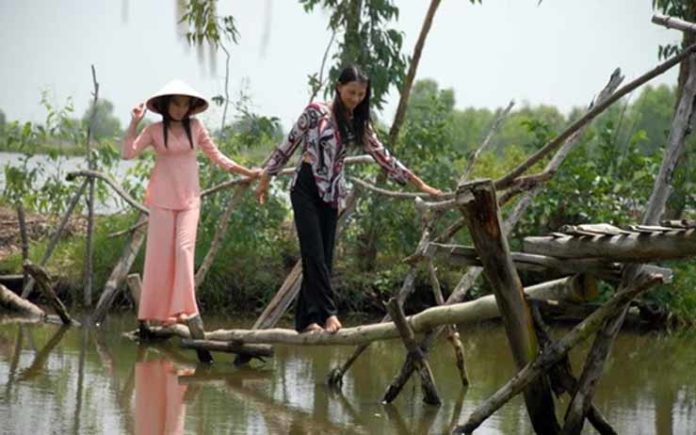
This is surely not a modern day bridge. Crossing over the Mekong Delta, this monkey bridge, like any other scattered across Vietnam, was handmade from just one piece of bamboo log. It has become a Vietnamese traditional symbol that got its name from the silly way people have to position their bodies while crossing it. These bridges are generally difficult and dangerous for those who are not used to them, but locals actually use these bridges all the time and they are known to carry 20–50 kg while they cross the bridge. We guess it’s fair to say that you shouldn’t try this at home.
Monkey Bridges (Vietnam)
Hussaini Hanging Bridge (Pakistan)
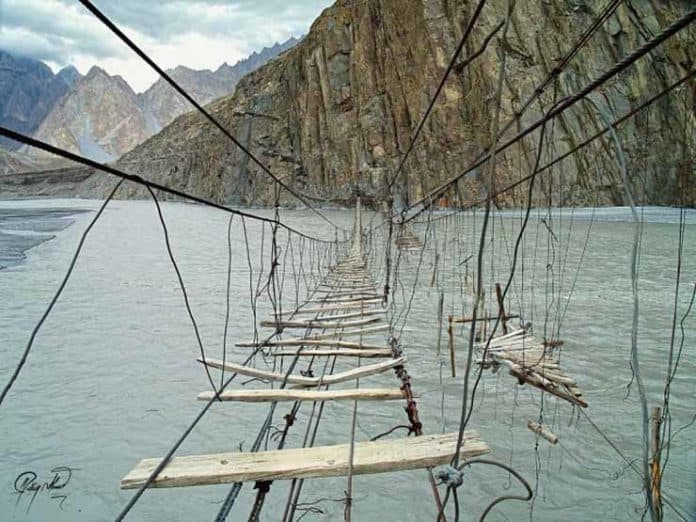
Claimed to be the world’s most dangerous, this bridge is among the many not-so-safe rope bridges found in Northern Pakistan. There are quite a few reasons why this bridge located in the Upper Hunza region is terrifying. First of all, falling through this rickety swinging bridge filled with gaps would have you plunging into the raging waters of the Hunza River below. Secondly, this bridge is quite poorly maintained and as you walk across, there are strong winds that vigorously shake the structure. Finally, as you cross the bridge, you can see the previous bridge’s ragged remains still hanging in tatters right next to the new bridge.
Hussaini Hanging Bridge (Pakistan)
Seven Mile Bridge (Florida, USA)
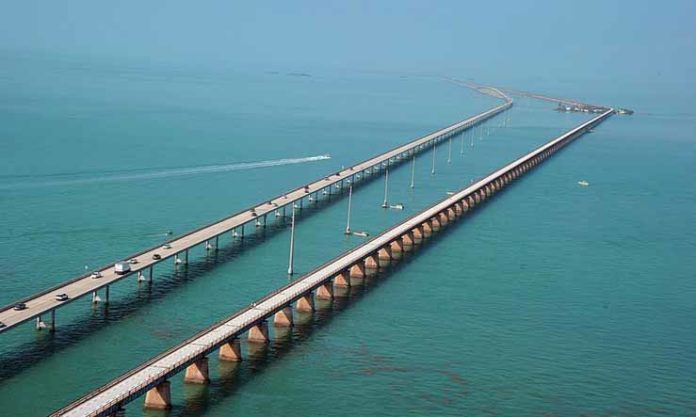
This is actually the second Seven Mile Bridge since the first one was decommissioned and its swing span was taken down after a destructive hurricane. Located in the Florida Keys, the newer Seven Mile Bridge connects the islands Knights Key and Little Duck Key, which are in the middle and lower Florida Keys respectively. When it was constructed, the Seven Mile Bridge was among the world’s longest bridges and it has won eight awards, including the Exceptional Award for Cost Savings Innovation presented by the Federal Highway Administration. It may not look very scary, but it’s probably the last place you would like to find yourself during a Florida hurricane.
Seven Mile Bridge (Florida, USA)
Deception Pass Bridge (Washington State, USA)
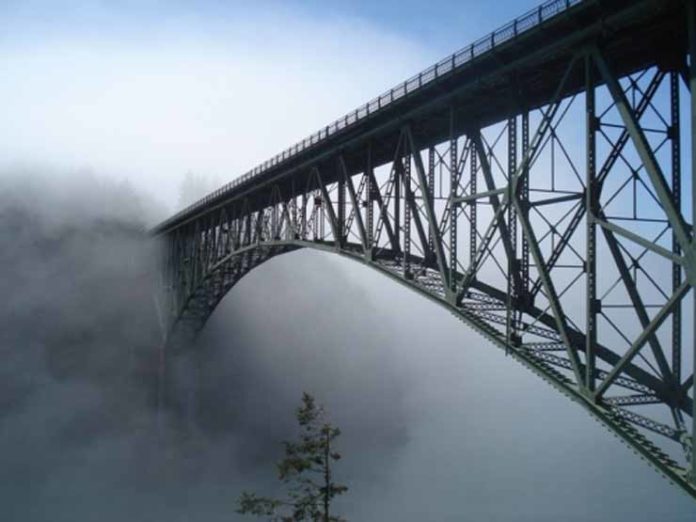
Connecting Whidbey Island to Fidalgo Island, this foggy bridge would surely be terrifying to cross seeing as it’s 180 feet above Deception Pass waters. Prior to the construction of Deception Pass Bridge, people had to take a ferry to reach the islands and in the early 20th century, locals traveled with their horse-and-buggy and used an unscheduled ferry in order to get to Whidbey Island from Fidalgo Island. They would call the ferry by banging a saw with a mallet and then wait for the ferry. Even though the bridge is among the Pacific Northwest’s scenic wonders, we secretly wish that the ferry rides were still available as we aren’t completely sure we’d want to cross the bridge…
Deception Pass Bridge (Washington State, USA)
Lake Pontchartrain Causeway (Louisiana, USA)
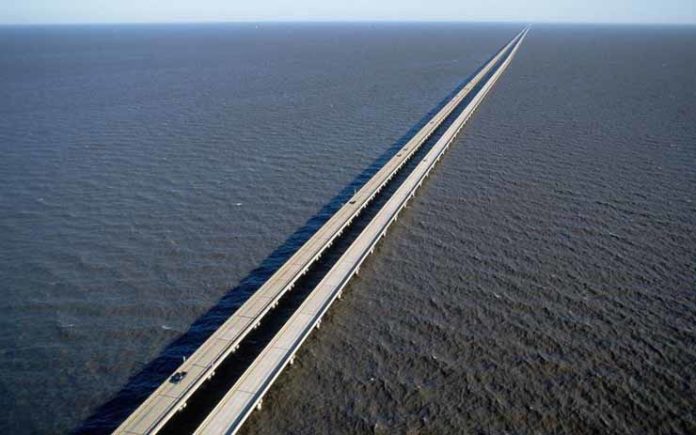
This bridge is the longest and among the world’s scariest as it stretches 23.83 miles and sits just 16 feet above Lake Pontchartrain’s choppy waters. Since 1969, the Pontchartrain Causeway has held the record for being the world’s longest bridge that is over water. Its construction greatly helped the economy of the surrounding small communities in North Shore by reducing the time it takes to drive into New Orleans by as much as 50 minutes. Now, the communities can access the Metropolitan city more conveniently.
Lake Pontchartrain Causeway (Louisiana, USA)
Canopy Walk (Ghana)
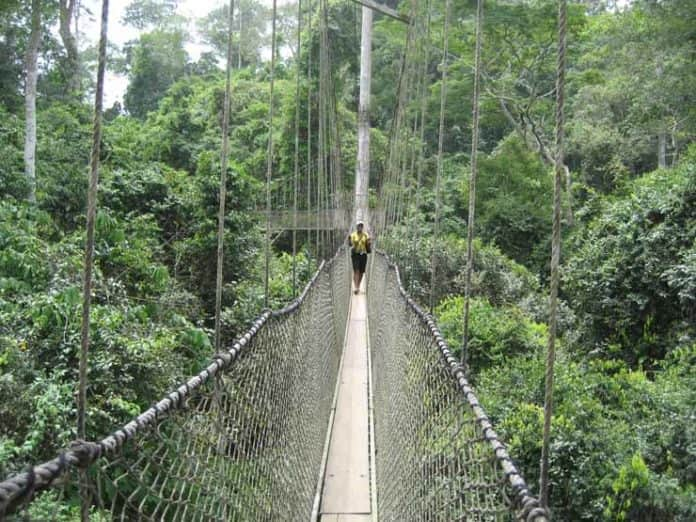
Suspended roughly 40 meters above the ground, this structure is a nice twist to the typical rainforest walk as it’s a nice (yet scary) way to have a closer look at nature, at the trees, birds and monkeys. Designed to be appealing in order to increase tourism in the park, this bridge can be found in the tropical forest of Kakum National Park, though the walkway was actually built by two Canadians with the help of Ghanaians. Seven separate bridges which hang about 130 feet in the air comprise the walk. No need to worry, though, the bridges may look like traditional rope bridges, but they are actually really sturdy, made of wooden planks, rope, aluminum, and safety netting.
Canopy Walk (Ghana)
Langkawi Sky Bridge (Malaysia)
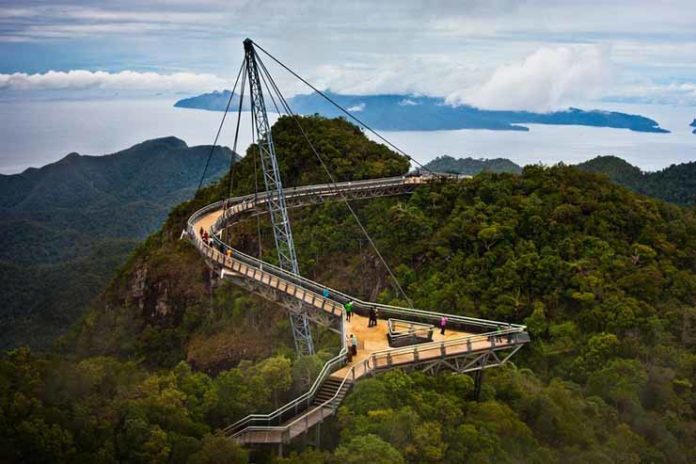
Hanging at about 320 feet above the ground, this bridge has been closed a number of times for maintenance, with its reopening getting delayed several times, it is open for use now. It is still freaky to think about though, the bridge had been closed for two years because of a potential collapse.
Langkawi Sky Bridge (Malaysia)
Mount Titlis, Switzerland
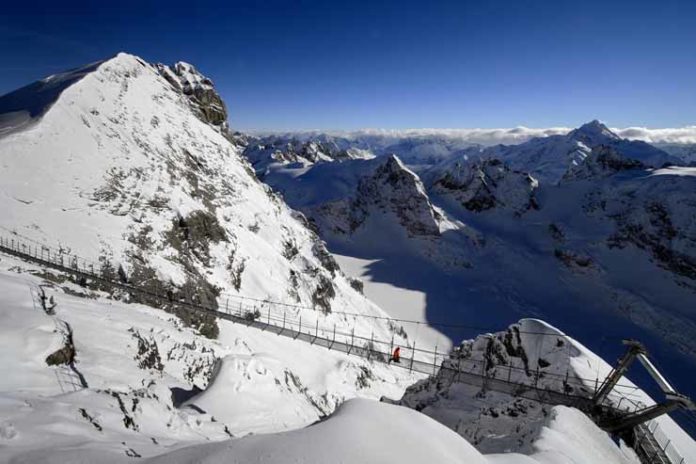
If you say that you would feel terrified crossing a bridge that is suspended about 3,000 meters above sea level despite a backdrop of the gorgeous Swiss Alps, then you are not alone. With stunning views of the Alps, the Titlis Cliff Walk is a suspension bridge with the highest elevation in Europe and it opened in December 2012. Fortunately, the bridge is very safe and tons of visitors and skiers walk across the bridge every year.
Mount Titlis, Switzerland
Vitim River Bridge (Russia)
This bridge used to be a train bridge that crossed the Vitim River, and as can be seen in the photo, it is pretty sketchy, with many rotting wooden planks missing and without any barriers. What’s worse, the bridge is usually slippery because of ice in the area, so drivers have to dangerously navigate the narrow six-foot-wide structure at their own risk. Few people have successfully crossed this ratty bridge but every year, a lot of daredevils go to Siberia to try.
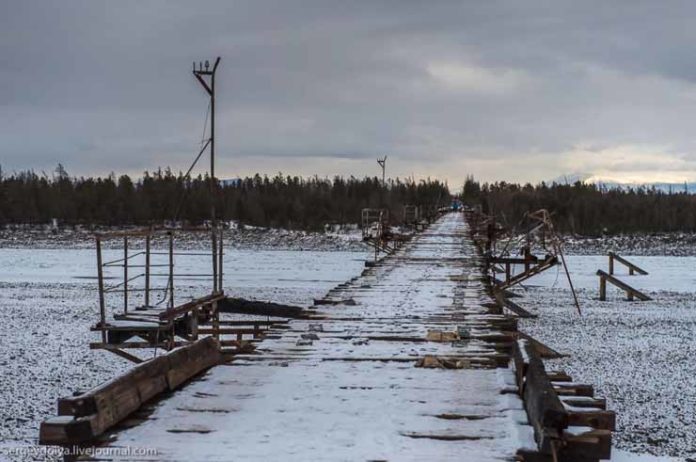
Vitim River Bridge (Russia)
Puente de Ojuela (Mexico)
The mining town below once used this bridge but today, is only pedestrians are allowed to use it since it is way too risky for a vehicle to pass over it. Completed in 1898, this bridge was restored in 1991 as a tourist attraction. Tourists flock here due to its reputation of being among the world’s most dangerous roads.
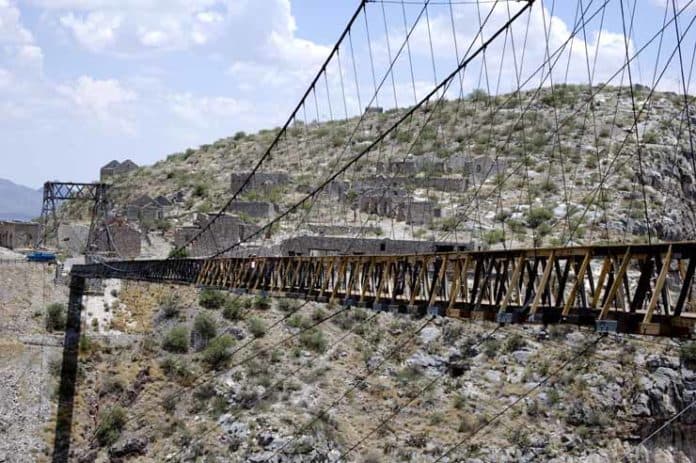
Puente de Ojuela (Mexico)
Quepos Bridge (Costa Rica)
Also known as the “Oh My God bridge” or “Bridge of Death,” this structure is something you cross at your own risk. The Bananera Company constructed this bridge in the 1930s and 1940s to transport bananas by train to the port of Quepos. It may not look like it is able to support a car’s weight, but trucks actually cross this bridge every day and they somehow survive. It is extremely narrow though, allows vehicles to travel only in a single direction, and its planks don’t extend the whole bridge and loudly clank under the weight of cars.
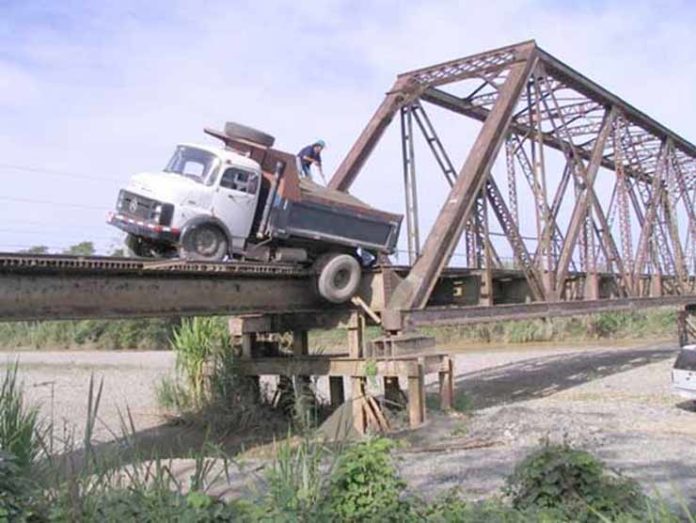
Quepos Bridge (Costa Rica)
Sunshine Skyway Bridge (Florida, USA)
The Bob Graham Sunshine Skyway Bridge, or also known by the locals as Sunshine Skyway Bridge, is 21,877 feet long and crosses Tampa Bay. In 1980, the original bridge got destroyed after an enormous ship ran into the pier, killing 35 people. In 1987, this newer bridge was constructed but sadly, since then, around 200 people have taken their lives at the bridge – quite ironic given its name.
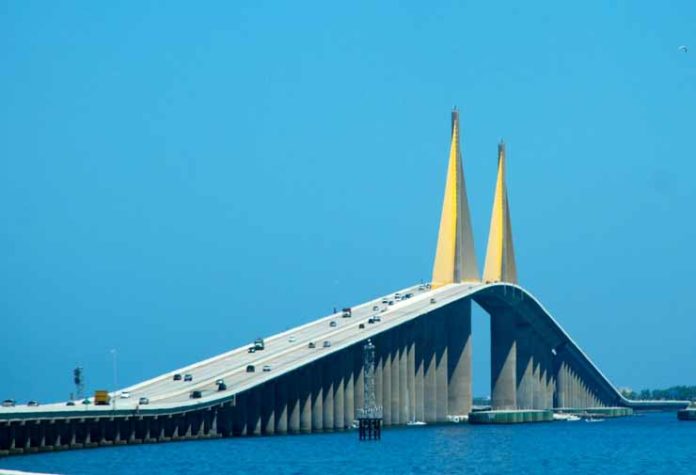
Sunshine Skyway Bridge (Florida, USA)
Eshima Ohashi Bridge (Japan)
If you are a fan of rollercoasters, you might like this Japanese bridge. It may not be as steep as it appears with a 6.1 percent gradient and being 144 feet high, we still wouldn’t grab the chance to drive up nor down that thing. Built between 1997 and 2004, this bridge is the largest Japanese rigid-frame bridge and in the world, it is the third largest.
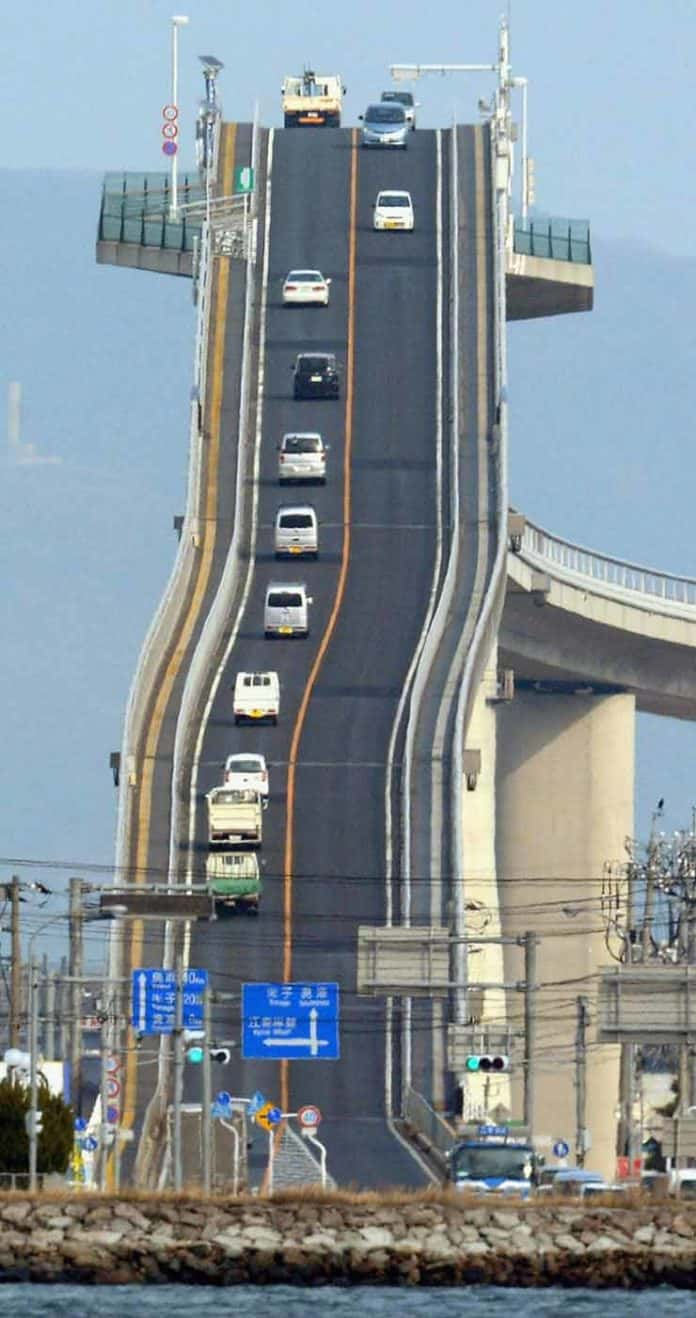
Eshima Ohashi Bridge (Japan)
The Bridge of Immortals (Huang Shang, China)
If you’re scared of heights, then you may want to avoid this bridge as it is situated between a pair of giant granite peaks in Huangshan (AKA Yellow Mountain) in eastern China. However, if you’re a dare devil, you might hear this bridge calling you to cross its path. It offers a spectacular view of the mountains, but we imagine it is even scarier on the way to the bridge. The Yellow Mountain is definitely a dream destination for an adventure thrillist.
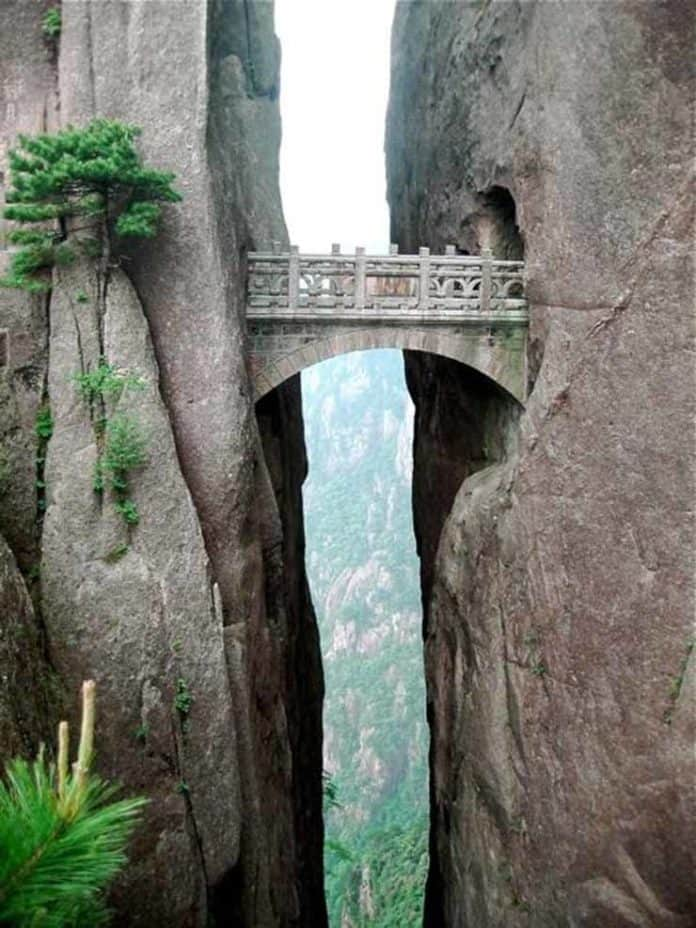
The Bridge of Immortals (Huang Shang, China)
Montenegro Rainforest (Costa Rica)
This beautiful and serene walk through the trees can be done in one of the most eclectic rainforests in the world. Visitors get a chance to get up close with the rainforest in Costa Rica when they cross these hanging bridges. However, if you decide to experience this for yourself, don’t get too distracted by the beautiful landscape and remember to look down. The bridge has some missing planks, so if you don’t want to end up on the forest floor, be careful and watch your step.
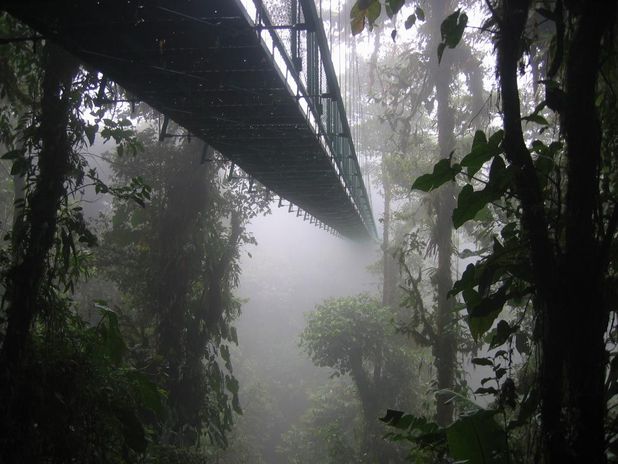
Montenegro Rainforest (Costa Rica)
U Bein Bridge (Myanmar)
You might think this bridge is undergoing renovation, but it actually always appears like this. Constructed in 1850, the U Bein Bridge in Myanmar is 1.2 kilometers in length and crosses the Taungthaman Lake. In addition, it is said to be the world’s oldest teakwood bridge and has turned into a tourist attraction because of its length of 1 kilometer and the way its pillars jut out of the water. The bridge definitely has heavy traffic from both locals and tourists, so souvenir sellers use this opportunity to sell souvenirs.
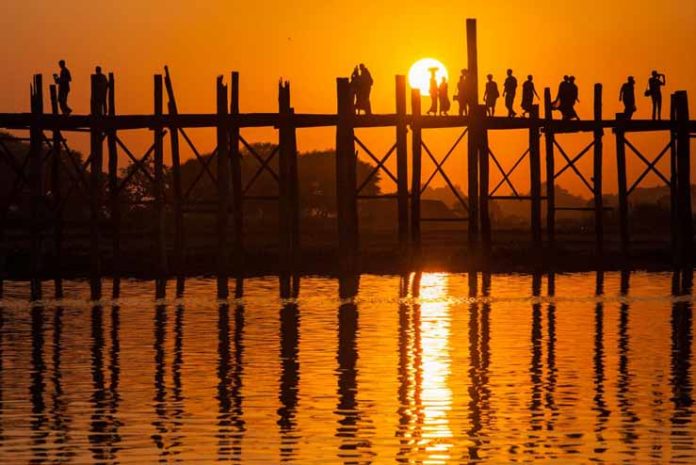
U Bein Bridge (Myanmar)
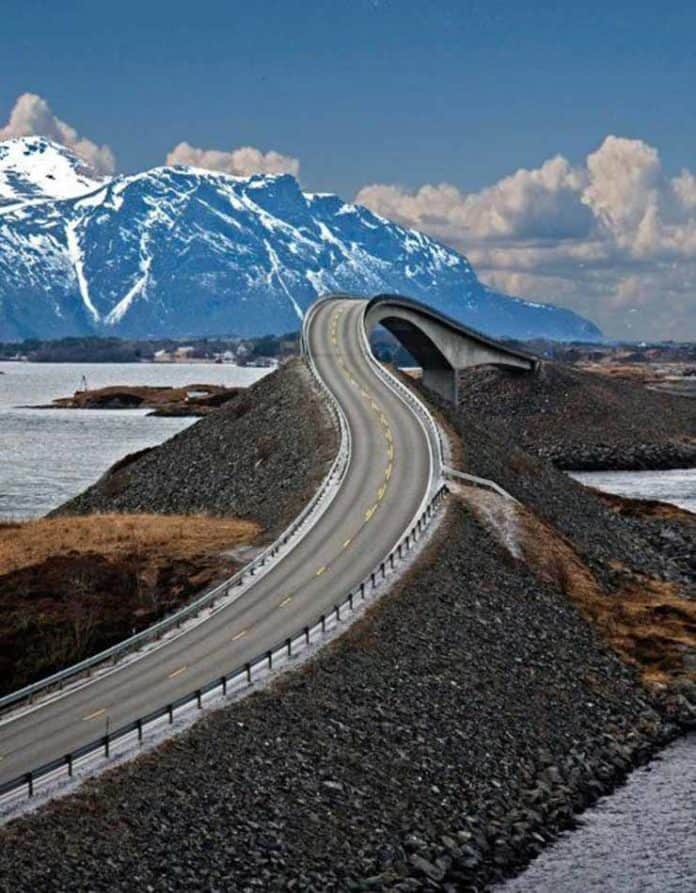
Storseisundet Bridge (Norway)
With the gorgeous backdrop of mountains, this road is quite spectacular but also a little nauseating. This bridge has been called “the road to nowhere.” However, it is among the official national tourist routes in the country. If you like the stomach drop feeling that roller coasters give, you will most likely enjoy this bridge.
Storseisundet Bridge (Norway)
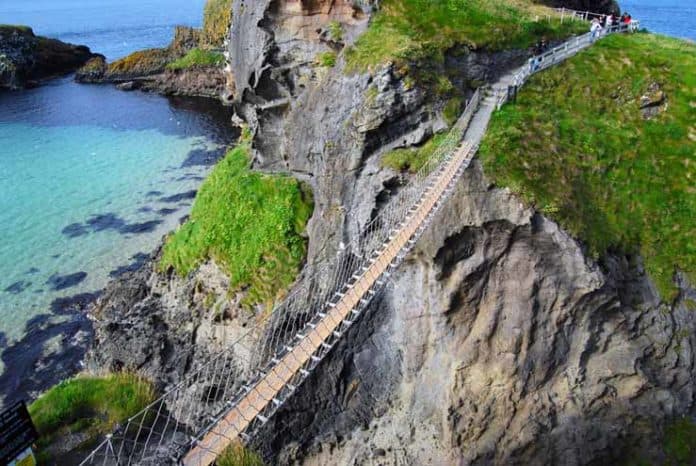
Carrick-a-Rede Rope Bridge (Northern Ireland)
Some people who had wanted to see the picturesque island located on the other side and had decided to take this 66-foot-long bridge got so frightened by it that they opted to ride a ferry going back instead. We can’t really blame them seeing as this bridge is positioned 30 meters above the water and rugged rocks. What’s more, you need to pay a toll for crossing this bridge. Apparently, not a lot of people in Ireland would like to pay to be scared.
Carrick-a-Rede Rope Bridge (Northern Ireland)
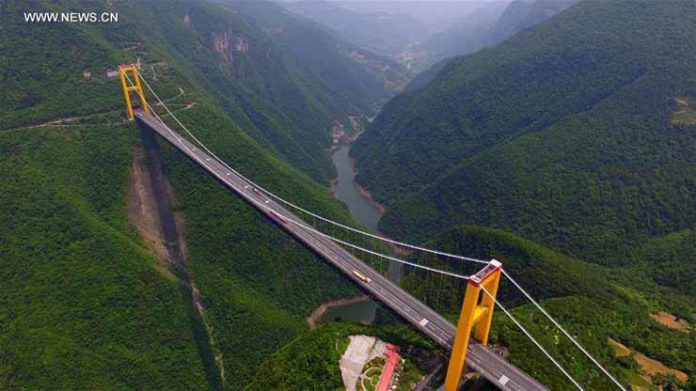
Sidu River Bridge (China)
China’s Sidu River Bridge is currently the world’s highest bridge. Built in 2009, this steel bridge cost $100 million to construct, hangs above the canyon floor at a nauseating 1,600 feet, and has a length of 4,009 feet crossing the river valley. Part of the ongoing highway expansion project of China, the bridge connects two parts of the country which were previously inaccessible due to several rivers and mountainous terrain. It offers truly staggering views of the valley below and fortunately, it is said to be among the sturdiest bridges built in history – and for everyone’s sake, we hope this is true.
Sidu River Bridge (China)
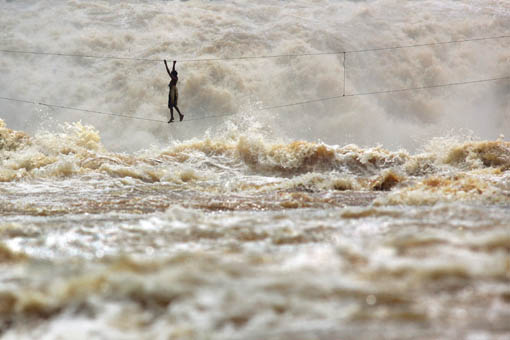
Mekong River Crossing (China)
The Mekong River is an enormous river that stretches across six countries in Asia – China, Myanmar, Thailand, Laos, Cambodia, and Vietnam. The condition of the river water can fluctuate from raging rapids to calm. This photo shows a man using the wires to get across the river with extremely choppy waters. Crossing our fingers that he is great at slack-lining because if not, he will be in deep waters, quite literally.
Mekong River Crossing (China)
Millau Viaduct (France)
The Millau Viaduct is Europe’s largest cable-stayed bridge and the world’s tallest bridge as it stands at a towering height of 1,125 feet and is 105 feet wide and over 8,000 feet long. It crosses the gorge in Tarn in Southern France and it was constructed from 2001 until 2004. Because of potential winds with the highest possible speed of 151 kilometers per hour, they installed side screens to reduce the wind’s effect by 50%. Back in 2006, the International Association for Bridge and Structural Engineering gave the Outstanding Structure Award to the Millau Viaduct.
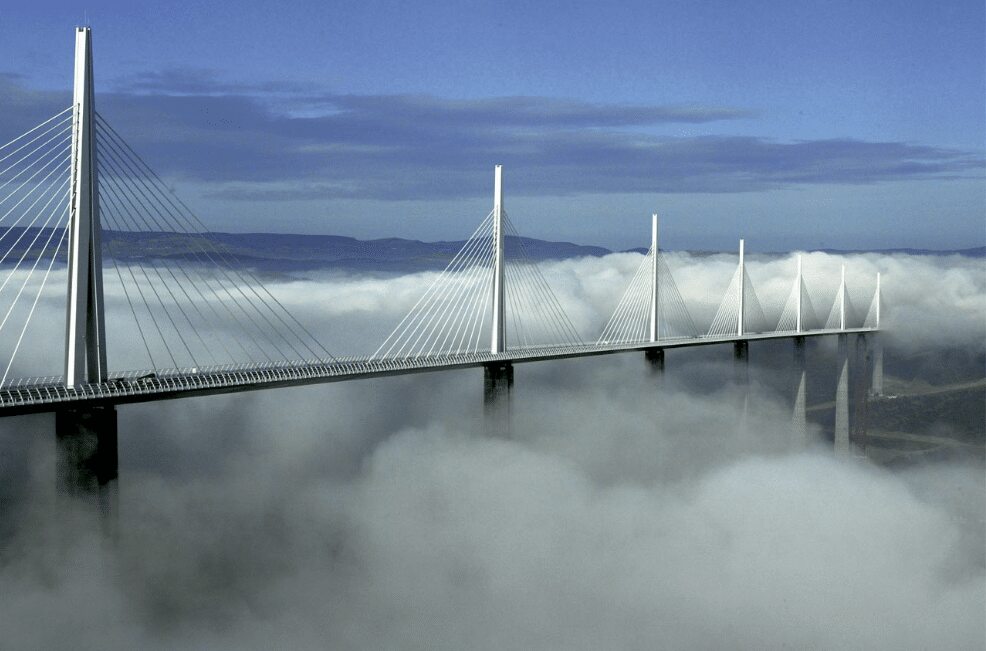
Millau Viaduct (France)
Iya Kazurabashi Bridge (Japan)
In this picture, it’s clear to see that everyone is holding on to the Iya Kazurabashi bridge which dates back to the 1300s. It is located in the Iya Valley and sits above the river of Iya-gawa in Tokushima, Japan. This bridge has wooden planks connected to each other with mountain vines. Historically, it is very significant, but perhaps the safety in renovations and modernization needs to be considered, so cross it at your own risk and just make sure that you hold on tight.
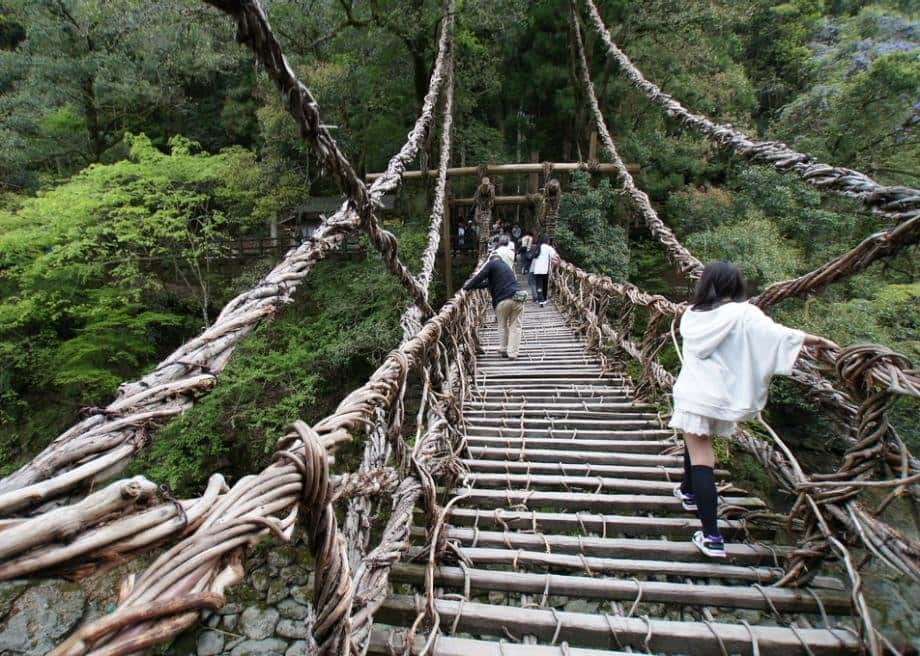
Iya Kazurabashi Bridge (Japan)
Mystery Bridge (Indonesia)
We’re not even sure why anyone is crossing this bridge seeing as it’s hanging on its side and it looks like it’s about to give up on life. This bridge seems to be a distant relative of the ‘Indo Board,’ a device used by skateboarders and surfers to develop balance. Basically, they try to balance a board without wheels on a foam cylinder while making sure they don’t touch the floor. In comparison, professional ‘indo-boarders’ wouldn’t really fare well on this Indonesian bridge.
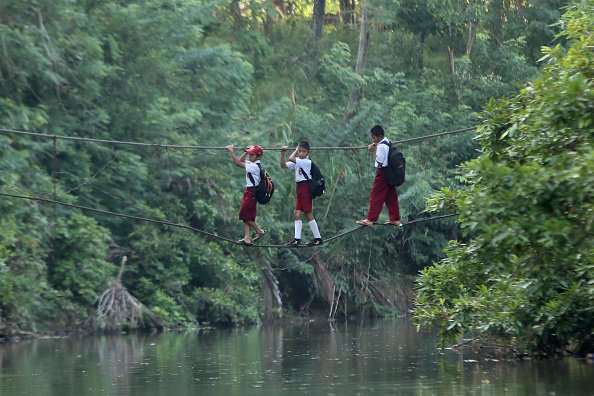
Mystery Bridge (Indonesia)
Trift Bridge (Switzerland)
Located near Gadmen in the Swiss Alps, the beauty of this bridge is apparent to everyone – those who are afraid of heights and those who are not. It is suspended at 558 feet over Switzerland’s glaciers and 328 feet above sea level. This bridge was constructed back in 2004, but struggled with upholding really windy conditions. Fortunately, stabilizing cables were added in 2009 in order to ensure safer conditions for the brave and daring souls who decide to cross the bridge.
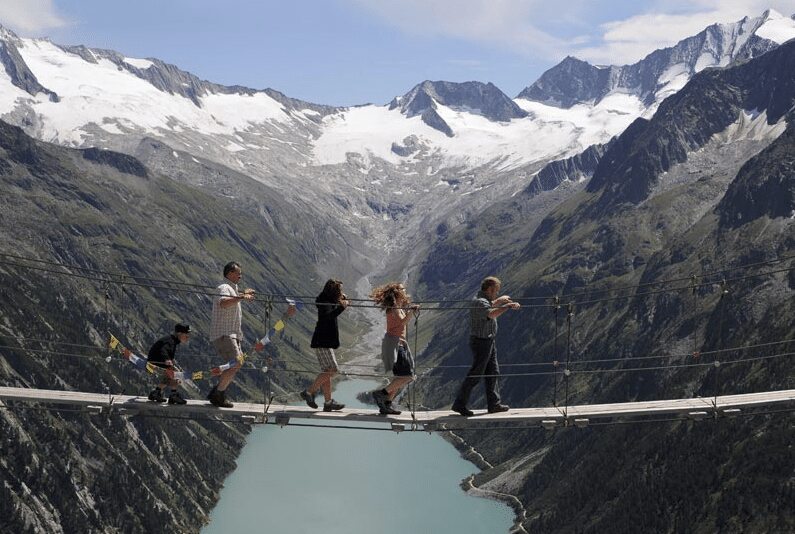
Trift Bridge (Switzerland)
Hanging Bridge Of Ghasa (Nepal)
Similar to a lot of crossings in Nepal, this hanging bridge is used by humans and animals. They have been using this bridge for decades in spite of its questionability under windy and rainy conditions. Every day, cattle and donkeys travel across this bridge that is hanging very high above the river valley. Fortunately, there are high side rails that protect those people brave enough to cross the bridge.
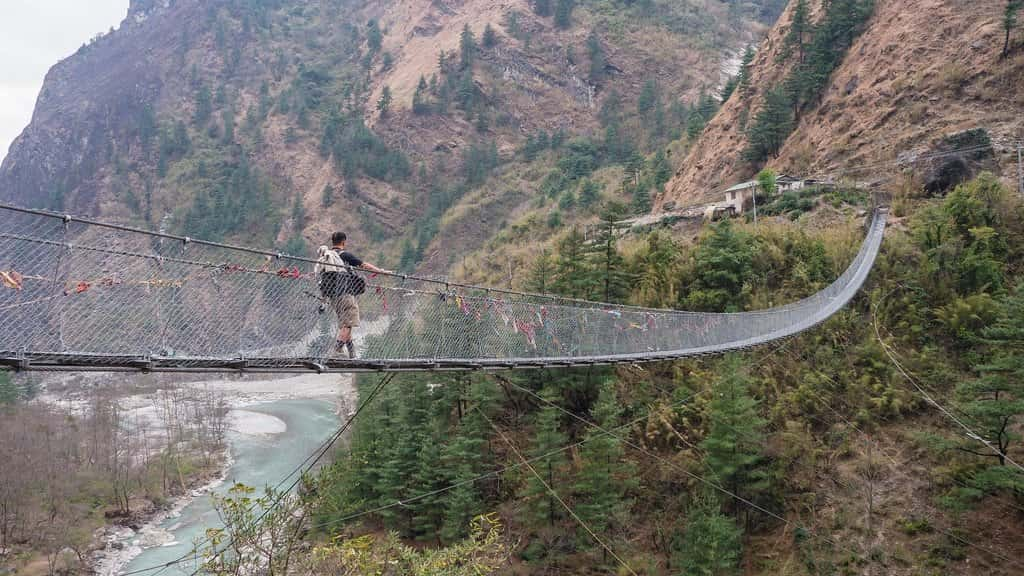
Hanging Bridge Of Ghasa (Nepal)
U Bein Bridge (Myanmar)
Built in 1850, the U Bein Bridge stretches for about three fourth of a mile over the Taungthaman Lake. It is made from teak, a tropical hardwood tree and is really dangerous since there aren’t any side rails and there isn’t anything to hold on to when you walk across. What’s more, falling is not the only thing you’ll have to worry about because in recent years, the bridge has become a crime hotspot as well. Policemen are now guarding the bridge to protect passersby and tourists.
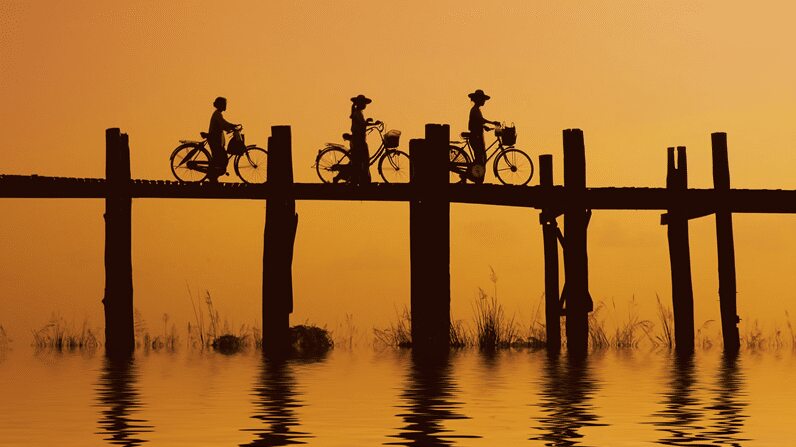
U Bein Bridge (Myanmar)
Root Bridges (India)
These bridges can teach the world a thing or two because they were not actually built but grown from material that is found in nature. The bridges were “constructed” using the tangled roots of a tree found in the Khasi and Jaintia Hills called Ficus elastica, a rubber tree that produces secondary roots higher up its trunk. The tribes of War-Khasis and War-Jaintias, who are closely related, learned to guide the roots and vines of the trees to the right direction to use them to create the spectacular pathways and bridges through the forest and over rivers.
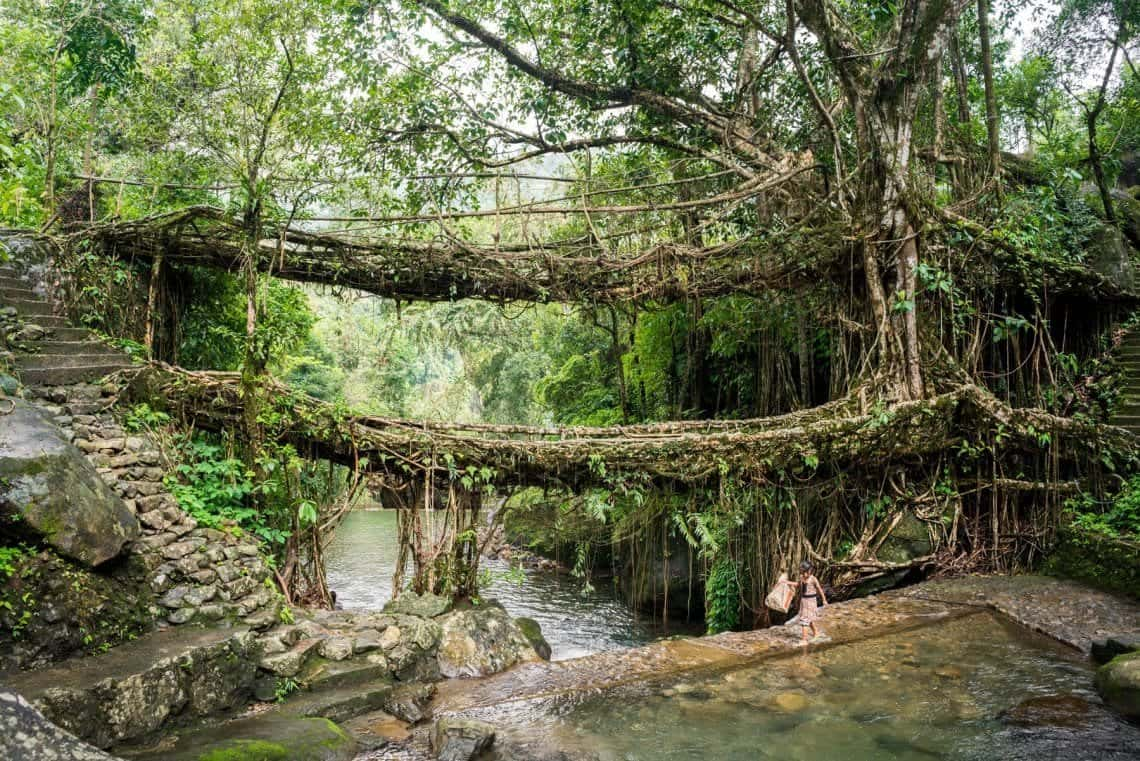
Root Bridges (India)
Taman Negara Canopy Walkway (Malaysia)
The Taman Negra Canopy Walkway is the longest of its kind, stretching over 1,700 feet, and hangs 130 feet above the ground. This bridge has become one of the top tourist attractions in Malaysia. Cross the walkway only if you feel super brave and try not to look down.
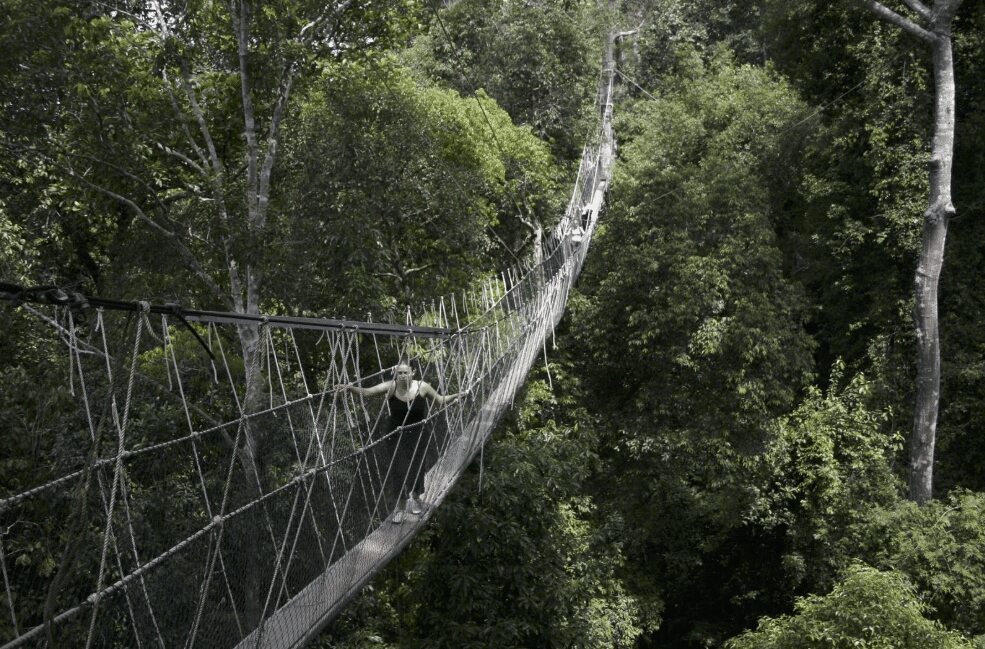
Taman Negara Canopy Walkway (Malaysia)
Keshwa Chaca Bridge (Peru)
If you guessed that this bridge is made of woven grass, then you are right. However, if you are questioning its reliability, you don’t actually need to since it has stood the test of time, having been built by the Incas 500 years ago. A lot of work went into the construction of this bridge and many people were involved, like the women who first had to braid smaller, thinner ropes and the men who then used the small ropes to braid larger support cables. Known for being the last structure from Incan engineering, the Keshwa Chaca Bridge is quite impressive for holding out through the many years.
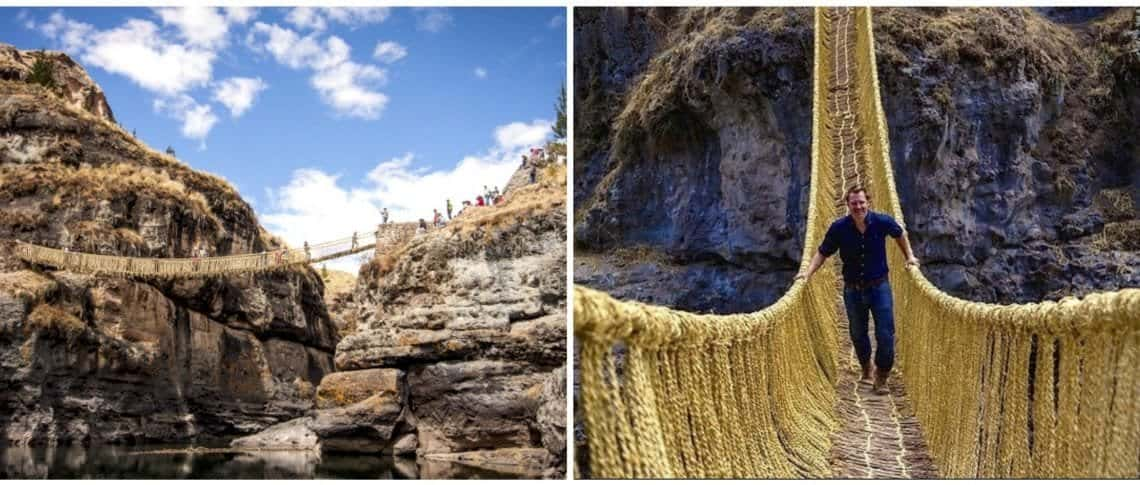
Keshwa Chaca Bridge (Peru)
Longjiang Suspension Bridge (China)
Also known as the Long River Bridge, the Longjiang Suspension Bridge can be found outside of the city of Baoshan and connects Baoshan to the city of Tengchong in west Yunnan. The highest and tallest suspension bridge in Asia, its construction was very intricate and was only completed in 2016, after five years. Stretching over 3,900 feet and suspended 920 feet above the river, it is among the world’s longest and tallest bridges. Before it was constructed, locals needed to take a detour of 8.4 miles to get to Tengchong from Baishan – what an inconvenience!
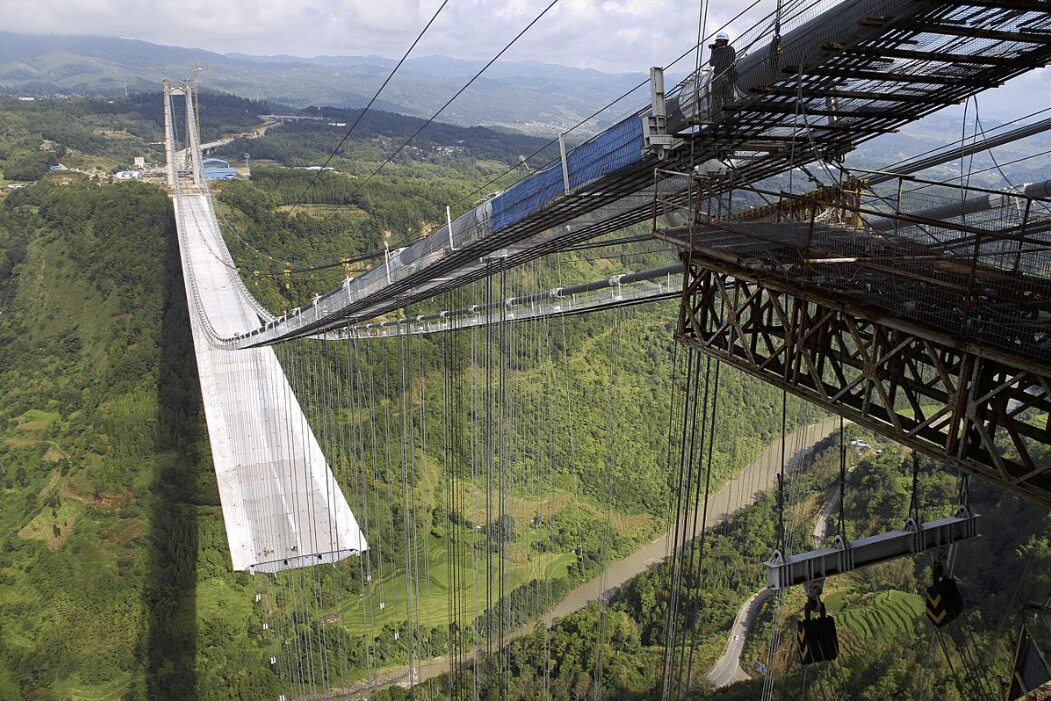
Longjiang Suspension Bridge (China)
Capilano Suspension Bridge (Canada)
The Capilano Suspension Bridge sits 230 feet above the waters of the Capilano River in Northern Vancouver. Stretching 460 feet, the bridge gets approximately 800,000 visitors in a year, which isn’t really surprising given the area it is located in. It was originally built in 1889 by the Scottish civil engineer George Grant Mackay and was sold twice before Rae Mitchell bought and renovated the entire bridge during the mid-1950s. Fun fact: this bridge has been the setting of episodes of different T.V. series, such as MacGyver, The Crow: Stairway to Heaven, Sliders, and Psych.
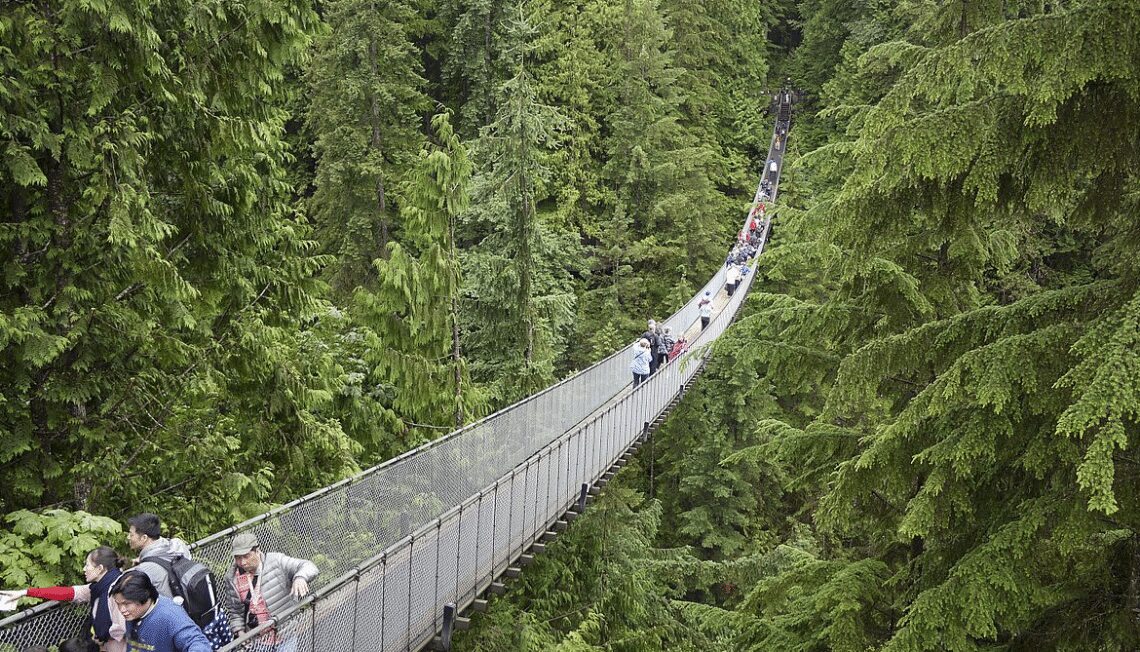
Capilano Suspension Bridge (Canada)
Ai Petri Bridge (Ukraine)
With amazing views all around, this bridge sits high up in Ukraine’s mountains and crosses over a canyon that is 4,200 feet deep. It connects two of the many peaks of the Crimean Mountains. The bridge actually gets plenty of fog and wind because of the area it is situated in. Even on quite a calm day, you should be careful when crossing over the gigantic canyon because the bridge still has the tendency to shake as you walk across it.
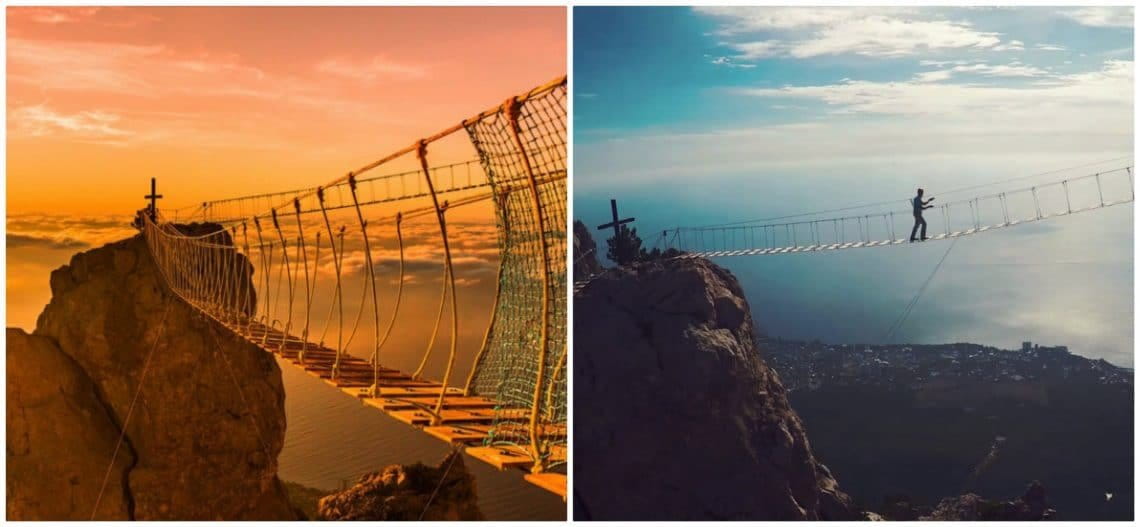
Ai Petri Bridge (Ukraine)
Suspension Glass Bridge (China)
Located in China’s Shiniuzhai National Geological Park, this glass bridge was cost $3.4 million to construct and was built in 2015, stretching 1,410 feet between mountains. Israeli architect Haim Dotan designed the bridge, which has set a few world records for its construction and architecture. After its opening, the bridge had to be closed for a period of time because the number of visitors it got went over the maximum recommended capacity of 8,000 people per day by 10 times. Glass bridges have become really popular in China because of the photo opportunities that they provide. Although this bridge is absolutely stunning, the 984-foot drop may make your stomach lurch if you look through its glass bottom.

Suspension Glass Bridge (China)
Plank Road in the Sky (China)
We’re not actually sure if this can be considered a “bridge” since it is literally just wooden planks along Mount Hua’s edge in China. This bridge is situated 7,000 feet high up on a mountain and to be honest, it looks completely terrifying (!) despite the view looking unbeatable. To cross, you first have to attach your harness to the piece of rope which runs along the side of the mountain, and then grip the chain while walking along the edge. What’s more if you come across some traffic, you have to unclip your harness, go past the other person and clip back!

Plank Road in the Sky (China)
Cape William Moore Bridge (Alaska)
The 100-foot Cape William Moore Bridge can be found on the Klondike Highway that is located near Skagway, Alaska. This suspension bridge was built in 1976 in order to let traffic pass over the Moore Creek Gorge. This bridge is often used by trucks which transport ore back and forth. Unfortunately, the bridge has gotten to the point of utter deterioration but there are plans to renovate it to maybe a pedestrian walkway.

Cape William Moore Bridge (Alaska)
Marienbruecke (Germany)
Have you ever heard of someone giving another person a bridge for their birthday? Well, in 1840, Crown Prince Maximilian II had this this bridge built as a birthday gift for his friend Marie, who climbed mountains with him. Situated over a cliff, this pedestrian bridge is popular with tourists because of its views of the Neuschwanstein Castle and the absolutely breathtaking scenery of both the deep gorge below and the castle. The bridge has been restored, but the original barristers are used to this day.

Marienbruecke (Germany)
Mackinac Bridge (Michigan, USA)
Also known as “Big Mac,” the Mackinac Bridge connects the upper peninsula to the lower peninsula of Michigan and spans 26,372 feet. In 1957, its construction was completed and since then, the bridge and the upper peninsula have turned into a major tourist attraction. This bridge may look really safe (and it is most of the time), but it does tend to get very strong winds, which in severe cases, may send vehicles flying off of the bridge. For those who want another mode of transportation, a ferry service is also available.

Mackinac Bridge (Michigan, USA)
Musou Tsuribashi Bridge (Japan)
This bridge is also known as the “scariest suspension bridge” in Japan and it was constructed in the 1950s. Unfortunately, it hasn’t been maintained well. It is located in Musou Tsuribashi, the Southern Japanese Alps. This bridge is made of a few wooden planks and wire and it has a narrow passage for the people daring enough to cross it.

Musou Tsuribashi Bridge (Japan)
William Preston Lane Bridge (Maryland, USA)
The William Preston Lane Bridge, AKA the Chesapeake Bay Bridge, sits 186 feet above Maryland’s Chesapeake Bay, stretches for nearly 5 miles, and gets traffic of 24 million cars per year. In 1967, it was renamed after Lane, Maryland’s governor between the years 1947 and 1951, who made a promise that the state would get “a system of highways second to none in the nation.” In 1973, after traffic increased in the area, the parallel bridge was constructed. The area often gets heavy storms, which make it hard for drivers to see, so you must be careful.

William Preston Lane Bridge (Maryland, USA)
Kawarau Bridge (New Zealand)
This bridge sits 43 meters above the waters of the Kawarau River and is a popular attraction due to the beautiful scenery. Located near Queenstown, the Kawarau Bridge is more commonly used for commercial purposes and many people come here to bungee jump. In addition, the bridge is part of the Queenstown Trail, which means it gets used by people who hike, run and go biking within the area.

Kawarau Bridge (New Zealand)
Geumgang Bridge (South Korea)
This bridge is located in Daedunsan Provincial Park, which has a lot of grandiose rock peaks of various summits and is an area full of lush trees. The setting is totally breathtaking, especially during autumn when the color of the leaves changes to an orange red hue. You should definitely bring your camera, though be careful while snapping some pictures as you cross the 50-meter-long bridge. No amount of great pictures is worth your life.

Geumgang Bridge (South Korea)
Moses Bridge (Netherlands)
This bridge used to be a moat that guarded a Dutch fortress but now, it is a “sunken bridge” that disappears into the landscape, preserving historical accuracy. This inconspicuous entry to the fort lets visitors enjoy the area without spoiling the presence of the moat. The bridge is made entirely of waterproof wood and how the water is parted will likely remind everyone of the prophet this structure is named after. Luckily, visitors are able to pass through more easily than Moses had it and you will feel like the waters part for you.

Moses Bridge (Netherlands)
Henderson Waves (Singapore)
The Henderson Waves of Singapore, is a 36-meter high pedestrian bridge that has a curvy shape very much similar to a wave. In 2008, they completed the construction of this 274-meter long bridge. It is located between two parks and has become a popular spot among locals and tourists alike who enjoy the spectacular views of the island.

Henderson Waves (Singapore)
Mur Island Bridge (Austria)
The Mur Island Bridge is pedestrian bridge located in Graz, Austria and it connects the ends of the city in order to link the natural and contemporary architecture of the city. Originally constructed in 2003, the bridge was meant to be temporary and was built to honor the appointment of Graz as the capital of culture in Europe. However, due to the bidge’s popularity among tourists and locals, the city decided not to remove the infrastructure.

Mur Island Bridge (Austria)
Pont de Singe (England)
Now this is certainly a different twist on a typical bridge. With a name that means “monkey bridge,” the Pont de Singe bridge was created by Olivier Grossetête, a French artist who used three massive helium balloons to make the bridge float for the Tatton Park Biennial back in 2012. You can find the bridge in the park’s Japanese garden. Unfortunately, just one person is allowed to cross at a given time.

Pont de Singe (England)
Rakotzbrücke Devil’s Bridge (Germany)
Nestled among the greenery in Kromlauer Park in Kromlau, Germany, the Rakotzbrücke is an arched devil’s bridge with a design that creates a circle whenever the bridge is reflected on the water. Similar to a lot of other bridges throughout Europe, this structure is also called the “Devil’s Bridge” since it is said only Satan was able to create such a dangerous or magical bridge.

Rakotzbrücke Devil’s Bridge (Germany)
Confederation Bridge (New Brunswick)
It is one of the most impressive engineering constructions in Canada and the world’s longest bridge over ice-covered water. The 8-mile bridge connects Prince Edward Island to New Brunswick in eastern Canadian. It took four years to construct, cost 1.3 billion dollars to build, and five thousand workers helped build it. Its height of 131 feet is not exactly what makes it scary but the high winds which can make a car sway over miles of ice.

Confederation Bridge (New Brunswick)
Ponte Vasco da Gama (Lisbon, Portugal)
This steel bridge is the second longest bridge in Europe and it crosses the shallow yet wide Tagus Estuary in order to bypass Lisbon. This cable-stayed bridge’s longest span is 1,378 feet and total length is 7.67 miles. Its base extends into the bedrock by 95 meters while its pillars were reinforced in order to support winds of up to 155mph. The Vasco da Gama bridge’s architects have said that the structure could withstand an earthquake that is 4 times as strong as the 1755 earthquake.

Ponte Vasco da Gama (Lisbon, Portugal)
Pont du Gard (France)
A piece of history, the Pont du Gard spans 902 feet over France’s Gard River and winds between two cities, over 50 kilometers long through the mountains. Its construction was started around 40 C.E. and in the Roman times, it was the highest aqueduct at 164 feet and supplied water to Nîmes CIty for five centuries. A wonder of ancient construction, the aqueduct is a true engineering marvel as it was built with extraordinary precision and completely with dry materials, without need for masonry. This bridge is strikingly beautiful owing to its natural surroundings and elegant forms that have barely shown any sign of suffering in the past 20 centuries and every year, it is among the most visited monuments in France.

Pont du Gard (France)
Kintai Bridge (Japan)
The five-arched Kintai Bridge is an all-wood construction that is made of Japanese oak, zelkova, pine, cypress, and chestnut. Constructed in 1673, the bridge was renovated in 1950 because the arches were deteriorating. It looked like the arches were floating up from the solid stone base. In Japanese, kintai means ‘gold brocade sash.’

Kintai Bridge (Japan)
Slater Bridge (Cumbria, England)
This bridge spans the River Brathay in Cumbria and was built in the 16th century. It is made of slab and arch and was once on a route that pack-horses used in order to transport slates from quarries located in the hills. The length of the arch stones is up to 4.3 feet and its width is 4.2 feet.

Slater Bridge (Cumbria, England)
Aqueduct de los Milagros (Spain)
The Aqueduct de Los Milagros was built during the reign of the Roman emperor Trajan, shortly after 100 C.E., at the peak of Roman engineering. This aqueduct carried water from Spain’s Albarregas River to the city of Emerita Augusta in Rome. Nowadays, it is a favorite of storks for building their nests. The maximum height of this structure is 98.5 feet and the longest distance between piers is 14.8 feet.

Aqueduct de los Milagros (Spain)
Carioca Aqueduct (Rio de Janeiro, Brazil)
The Carioca Aqueduct is situated in Rio de Janeiro, a bustling seaside city in Brazil. Its construction started in 1723 and it was built to carry water from the Carioca River so that people in Rio could get a supply of fresh water. It is an awesome example of colonial engineering and architecture, with its pair of 42 storeys monumental arches and its height of 57.7 feet. These days, it is a bridge for the popular tram which connects the city center to the neighborhood, Santa Teresa.

Carioca Aqueduct (Rio de Janeiro, Brazil)
Bhumibol Bridges (Bangkok, Thailand)
The multi-level spiral interchange that crosses the Chao Phraya River seems less like a bridge and more like a rollercoaster. This bridge is 164-feet high and located in the south of the capital city Bangkok between the two Bhumibol cable slated bridges. It connects the north and south routes of the bridges with a western approach. The bridge’s design is very elegant, with an elongated diamond shape and concrete towers.

Bhumibol Bridges (Bangkok, Thailand)
Baliem River Bridge (Western New Guinea)
Sitting above the Baliem River’s rapid choppy waters, this makeshift bridge in the Baliem valley will definitely make you think twice about crossing it. If you decide not to risk your life walking across it, we certainly won’t judge you. It looks like this bridge’s designer used an acceptable outline, one that mirrors professional engineering, but there’s something about it that still isn’t very reassuring. It’s hard to pinpoint just one cause for the doubt and fear.

Baliem River Bridge (Western New Guinea)
Golden Gate Bridge (San Francisco, USA)
In 1937, the Golden Gate Bridge was opened to the public and it has become the top tourist attraction in San Francisco and one of North America’s most iconic structures. It connects San Francisco with the northern counties of California and spans nearly two miles across the narrow strait connecting San Francisco Bay and the Pacific Ocean which is called the Golden Gate. The bridge has massive 746-foot tall towers, signature International Orange color, and Art Deco styling. If you intend to visit, be prepared for crowds because this bridge has around 10 million visitors per year.

Golden Gate Bridge (San Francisco, USA)
Akashi Kaikyō Bridge (Japan)
This suspension bridge connects Kobe City on Honshu, the Japanese mainland, to Iwaya that is on Awaji Island. The Akashi Kaikyo Bridge is almost four kilometers long and crosses the Akashi strait since the bridge is on the Honshu-Shikoku highway. It was first opened to the public back in 1998.

Akashi Kaikyō Bridge (Japan)
Sydney Harbour Bridge (Sydney, Australia)
Nicknamed “The Coathanger” due to its arch-based design, the Sydney Harbour Bridge connects Sydney’s central business district to the north shore. This steel arch bridge carries traffic from pedestrians, bikes, vehicles and rail. The dramatic and amazing view of the bridge, the nearby Sydney Opera House, and the harbour is an image of Sydney (and also Australia) that is quite iconic. The design of this bridge was actually influenced by New York’s Hell Gate Bridge.

Sydney Harbour Bridge (Sydney, Australia)
Danyang–Kunshan Grand Bridge (Shanghai)
Recognized as the longest bridge in the world, the Danyang-Kunshan Grand Bridge is a viaduct that is 164.8 km long and it is located on the Beijing-Shanghai high-speed railway. In 2010, the construction of the bridge was completed after four years, 10,000 workers, and $8.5 billion.

Danyang–Kunshan Grand Bridge (Shanghai)
Ponte Vecchio (Firenze, Italy)
The Ponte Vecchio, meaning “old bridge” in Italian, was the only bridge that crossed the Arno River in Florence until the year 1218 but in 1345, there was a flood, so the bridge had to be rebuilt. During the Second World War, the Germans destroyed all the bridges across the Arno except this one, but they obstructed access to it by knocking down the medieval buildings on its sides. These days, there are occasionally concerts, theater presentations, and boat rides underneath bridge which visitors can see in addition to admiring the Ponte Vecchio. In addition, there are many shops along the bridge which are filled with art, jewelry, and souvenirs.

Ponte Vecchio (Firenze, Italy)
Hangzhou Bay Bridge (China)
The Hangzhou Bay Bridge is a highway bridge that has a cable-stayed portion and crosses the Hangzhou Bay, which is in China’s eastern coastal region. It is an enormous sea-crossing bridge that is 36 kilometers long. It connects the municipalities of Ningbo and Jiaxing in Zhejiang province. On June 14, 2007, the construction of the bridge was completed and there was an opening ceremony for it on June 26, 2007.

Hangzhou Bay Bridge (China)
Forth Bridge (United Kingdom)
A UNESCO World Heritage Site and though of as a symbol of Scotland, this cantilever railway bridge crosses the Firth of Forth, which is in eastern Scotland, nine miles to the west of Edinburgh City Center. Sir Benjamin Baker and Sir John Fowler, English engineers, designed the construct. In 1890, when it opened, this bridge had the longest spans (541 meters) in the world. To this day, it still carries freight and passengers. The Forth Bridge marks a key achievement in the design and construction of bridges during the time when railways dominated long-distance land travel.

Forth Bridge (United Kingdom)
Runyang Yangtze River Bridge (China)
Situated in Jiangsu Province in China, this large bridge complex stretches over the Yangtze River, which is downstream of Nanjing. The Runyang Yangtze River Bridge complex has a pair of major bridges which connect Yangzhou on the north bank of the river and Zhenjiang on the south. The bridge is on the Yangzhou–Liyang Expressway.

Runyang Yangtze River Bridge (China)
Øresund Bridge (Sweden)
The Oresund Bridge provides motorway and railway access across the Øresund strait, which is between Sweden and Denmark. This bridge spans almost eight kilometres from the coast of Sweden to Peberholm, an artificial island in the middle of Øresund strait.

Øresund Bridge (Sweden)
Duge Bridge (China)
Located near the city of Liupanshui in China, the cable-stayed Duge Bridge tops previous records for height as of 2016 with the road deck situated more than 565 metres above the waters of River Beipan. In addition, this makes it one of the highest cable-stayed bridge. On the border between the provinces of Yunnan and Guizhou is where the bridge crosses the river. Actually, there is no other region in the world that has the same number of high bridges located in the remote Western province of Guizhou in China.

Duge Bridge (China)
Gateshead Millennium Bridge (England)
This is the first and only tilt bridge in the world. It is used by pedestrians and cyclists and enjoyed by many people from all around the globe. The Gateshead Millennium Bridge crosses the River Tyne in North East England. It is between the Quays arts quarter of Gateshead on the south bank and Newcastle’s Quayside on the north bank. Wilkinson Eyre Architects designed the bridge and Gifford engineered it.

Gateshead Millennium Bridge (England)
Tsing Ma Bridge (Hong Kong)
Located in Hong Kong, the Tsing Ma Bridge is the 11th longest span suspension bridge in the world, at 2.16 kilometers. It was opened to traffic back in 1997 and has since become a major infrastructure as a tourist attraction and serving the new airport which is on Lantau Island. The name of the bridge comes from the two islands that it connects which are Tsing Yi and Ma Wan.

Tsing Ma Bridge (Hong Kong)
Confederation Bridge (Canada)
This bridge crosses the Abegweit Passage, which is a part of the Northumberland Strait, and connects Prince Edward Island’s eastern Canadian provinces to mainland New Brunswick, Canada. Prior to receiving its official name, Prince Edward Islanders once called it the “Fixed Link.” The Confederation Bridge is curved and has a length of 12.9 kilometers, which makes it the world’s longest bridge that crosses ice-covered water. It is one of the top engineering achievements of Canada for the 20th century.

Confederation Bridge (Canada)
Russky Bridge (Russia)
Located in Vladivostok, Primorsky Krai, Russia, the cable-stayed Russky Bridge reaches 70 meters above the sea level, is 1,885 meters long, and connects Russky Island to the city of Vladivostok. This is the world’s longest cable-stayed bridge and cost around $1.1 billion. It was constructed in preparation for the Asia-Pacific Economic Community Summit in 2012 that was held on Russky Island. The area’s extreme climate needed to be incorporated in the design of this bridge seeing as it can be affected by severe conditions.

Russky Bridge (Russia)
Charles Kuonen Suspension Bridge (Switzerland)
The Charles Kuonen Suspension Bridge can be found in Randa, Switzerland and it is the world’s longest hanging pedestrian bridge. It serves as the replacement of the Europabrucke, which was destroyed by a rock slide. Measuring an incredible 494 meters in length, this bridge is suspended 85 meters above the Mattertal valley’s Grabengufer ravine. The designers of this bridge actually wanted to interfere with the natural surroundings as little as possible, which they succeeded in doing.

Charles Kuonen Suspension Bridge (Switzerland)
Helix Bridge (Singapore)
Officially known as The Helix and formerly known as the Double Helix Bridge, this pedestrian bridge connects Marina Center to Marina South located in the Marina Bay area.

Helix Bridge (Singapore)
Bosphorus Bridge (Istanbul, Turkey)
The Bosphorus Bridge, which is (officially) called the 15 July Martyrs Bridge and also (unofficially) the First Bridge, is a suspension bridge (one of the three) that goes across the Bosphorus strait. Thus, it connects Europe and Asia. Actually, it doesn’t only connect continents but it also connects the municipalities of Ortakoy and Beylerbeyi in Istanbul, Turkey.

Bosphorus Bridge (Istanbul, Turkey)
Python Bridge (Amsterdam, Netherlands)
Known officially as High Bridge, the Python Bridge crosses the canal that is between Borneo Island and Sporenburg in Eastern Docklands, Amsterdam. Built in 2001, the bridge won the International Footbridge Award the following year.

Python Bridge (Amsterdam, Netherlands)